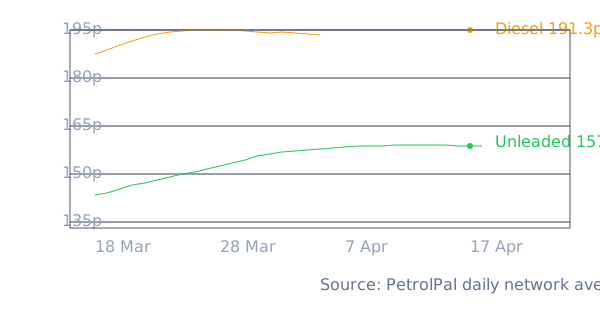
UK pump prices kept climbing through the first half of April 2026, with unleaded peaking at 158.03p per litre on 14 April and diesel touching 191.82p the same day, according to daily averages across the 7,491 stations in the PetrolPal network. Both figures are the highest since mid-2022. As of 17 April, unleaded has eased 0.36p and diesel 0.55p from that peak, the first sustained daily decline since late February. For the first time in eight weeks, wholesale costs are pointing toward cheaper forecourt prices in early May.
What Happened to UK Fuel Prices in April 2026?
The surge that started in early March carried into April without any immediate relief. Unleaded averaged 152.80p across UK forecourts on 31 March. By 14 April it had climbed to 158.03p, a further 5.23p rise. Diesel tracked a similar path, rising from 183.61p to 191.82p over the same fortnight.
| Date | Unleaded (p/litre) | Diesel (p/litre) | Premium unleaded (p/litre) |
|---|---|---|---|
| 31 March 2026 | 152.80 | 183.61 | 169.56 |
| 7 April 2026 | 156.95 | 190.06 | 174.08 |
| 14 April 2026 | 158.03 | 191.82 | 174.84 |
| 17 April 2026 | 157.67 | 191.27 | 174.65 |
The 14 April peak matters because it breaks the rising pattern. PetrolPal tracks price changes in near real time across the whole UK network, and the shift from weeks of daily increases to three consecutive days of modest decreases is a clear directional change at the wholesale level, even if pump prices have barely moved yet.
[See how April 2026 compares to the earlier surge in our March 2026 fuel price report.]
Why Did Prices Keep Rising Into April?
Three forces pushed pump prices higher through the first two weeks of April, and only one has started to reverse.
Brent crude stayed stubbornly high. Global crude prices held above $85 per barrel for most of the month, backed by OPEC+ supply discipline and continued demand from Asian manufacturing. UK wholesale fuel costs follow Brent with a two to three week lag, so the crude strength of late March was still feeding through to forecourts in mid-April.
Diesel supply pressure eased more slowly than petrol. The diesel-to-unleaded premium hit 33.79p on 17 April, an unusually wide gap. European refineries are still working through the spring maintenance cycle, which tightens middle distillate output. Heating oil demand has fallen with warmer weather, but the diesel supply chain is taking longer than usual to rebalance.
Sterling recovered, slightly. The pound gained a little ground against the dollar in early April. That put modest downward pressure on import costs, and is part of why the rise has slowed rather than continued. A stronger sterling trend into May would help reinforce any crude-driven easing.
Info
PetrolPal data note
Across the PetrolPal network, the spread between the cheapest 10% of unleaded forecourts (150.9p) and the most expensive 10% (164.9p) is 14p. On a 55-litre tank, that spread is worth up to £7.70. At elevated price levels, the cash value of finding a cheap station is at its highest in over a year.
Warning
Warning
Premium diesel hit a network average of 210.03p/litre on 17 April 2026, with some motorway services charging 230p. If you drive a diesel and have flexibility on where to fill up, avoiding motorway services alone can save 15 to 20p per litre right now.
Which Brands Have the Cheapest Fuel Right Now?
Supermarket forecourts have stayed consistently cheaper than branded stations throughout the April surge, and the gap has widened. On 17 April 2026, supermarkets averaged 155.15p for unleaded against a UK network average of 157.88p, a 2.73p advantage. For diesel the gap is larger: 187.95p at supermarkets versus 190.76p across the network, or 2.81p.
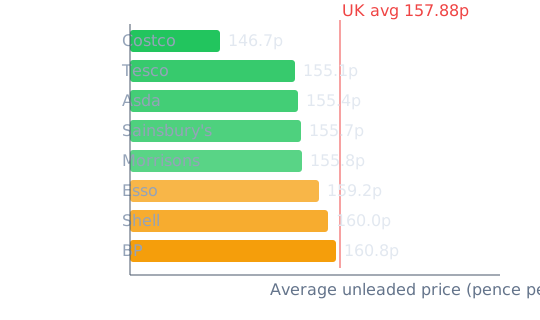
Costco remains the cheapest forecourt option at 146.7p, but only 20 Costco sites in the UK sell fuel and a paid membership is required. Among the major supermarkets available to all drivers, Tesco leads at 155.06p, followed by Asda at 155.37p and Sainsbury's at 155.71p. The spread between the four big supermarkets is only 0.7p, so convenience matters more than brand when choosing where to fill up.
Among branded stations, BP sits at the top at 160.77p, Shell at 160.00p, and Esso at 159.24p. The 5.71p gap between BP and Tesco represents about £3.14 on a 55-litre tank.
Tip
Tip
Independent forecourts averaged 157.25p for unleaded on 17 April, which is actually cheaper than any of the branded chains and close to supermarket pricing. Independents are worth checking on PetrolPal, especially in rural areas where they often undercut the majors.
[Compare the four big supermarkets in detail in our cheapest supermarket petrol guide.]
How Do April 2026 Prices Compare to Previous Years?
Mid-April 2026 is the most expensive April for UK fuel since the 2022 energy crisis. End-of-April prices in 2025 were well below current levels, and even April 2023 (which was still feeling the aftershocks of 2022) was cheaper than today's network average.
The year-on-year comparison with April 2025 is stark. According to the DESNZ weekly road fuel prices, unleaded averaged around 135p through April 2025, meaning today's 157.67p is roughly 22.5p higher. Diesel has risen even more sharply: April 2025's 142p compared with 191.27p today is a 49p gap, adding £26.95 to every 55-litre diesel fill.
What Will Fuel Prices Do in May 2026?
The directional shift that began on 14 April is genuine but small. Three scenarios shape the May outlook.
Base case: modest easing of 3 to 5p through May. This is the most likely path if crude oil drifts lower toward $80 per barrel and European refinery output normalises. Pump prices would finish May around 153 to 155p for unleaded and 186 to 188p for diesel. This is the scenario the first three days of daily declines are consistent with.
Downside case: sharper correction of 6 to 9p. Requires Brent crude below $75 per barrel, which would need either a notable OPEC+ policy change or weaker demand signals from Asian manufacturing. Unleaded could retest 150p by month-end and diesel could fall below 185p. Unlikely but not impossible if macro data weakens.
Upside case: another leg higher. A renewed geopolitical shock or tighter OPEC+ discipline could push crude back to $90+ and unleaded to 160p or above. The 14 April peak would then be revisited within weeks rather than hold as the cycle high. No specific trigger looks imminent, but the market remains sensitive.
Duty is frozen through the Budget window. Fuel duty stays at 52.95p per litre, unchanged since March 2022. The Spring Statement in March 2026 confirmed no change, and the next fiscal event with the authority to adjust duty is the Autumn 2026 Budget. Pump price moves through May and June will be driven entirely by wholesale costs, not tax policy.
Info
Timing your fill-up in May
The first week of any downward pump price trend tends to show the widest station-to-station dispersion, because supermarkets cut first and branded stations follow later. Use PetrolPal in early May to catch supermarket price drops before they become the new normal. The cash value of getting the timing right could be 4 to 6p per litre for a week or two.
Regional Snapshot: Where Is Fuel Cheapest in the UK Right Now?
PetrolPal's regional data shows meaningful variation across the UK on 17 April 2026. Northern Ireland averages around 151.9p for unleaded at Maxol stations, noticeably below the UK average of 157.88p. Scottish rural stations in the Highlands and Islands remain the most expensive in the country, with Skerries Co-operative Society in Shetland selling unleaded at 210p and Steisean Connaidh Chrosabol in the Outer Hebrides charging 230.4p for diesel.
In mainland Great Britain, cheaper regions include the North West (Leeds, Manchester, Preston) and South West (Gloucester, Bristol). London is not significantly more expensive on average than the national figure, but high-footfall sites in central London charge 219.9p or more for premium grades, making them some of the priciest fuel in the country outside motorway services.
[Browse live regional prices across the 128 UK fuel price pages in our fuel prices directory.]
What April 2026 Means for Your Fuel Budget
April 2026 brought the steepest UK pump prices since the 2022 energy crisis, with unleaded peaking at 158p and diesel at 191.8p on 14 April. The first signs of easing have arrived, but a meaningful return to 2025 price levels is a slow process, not an overnight change.
Three practical points stand out. Supermarket forecourts are 2 to 3p cheaper than the UK average and save more in absolute terms at these price levels than at any point in the past year. Motorway services are charging up to 230p for premium diesel, which is worth avoiding even if it means a small detour. And the price spread within any given postcode area can exceed 14p, so checking prices before every fill-up is the single most reliable way to control fuel spending through the rest of Q2 2026.
[Find the cheapest petrol or diesel near you right now with PetrolPal's live price map.]