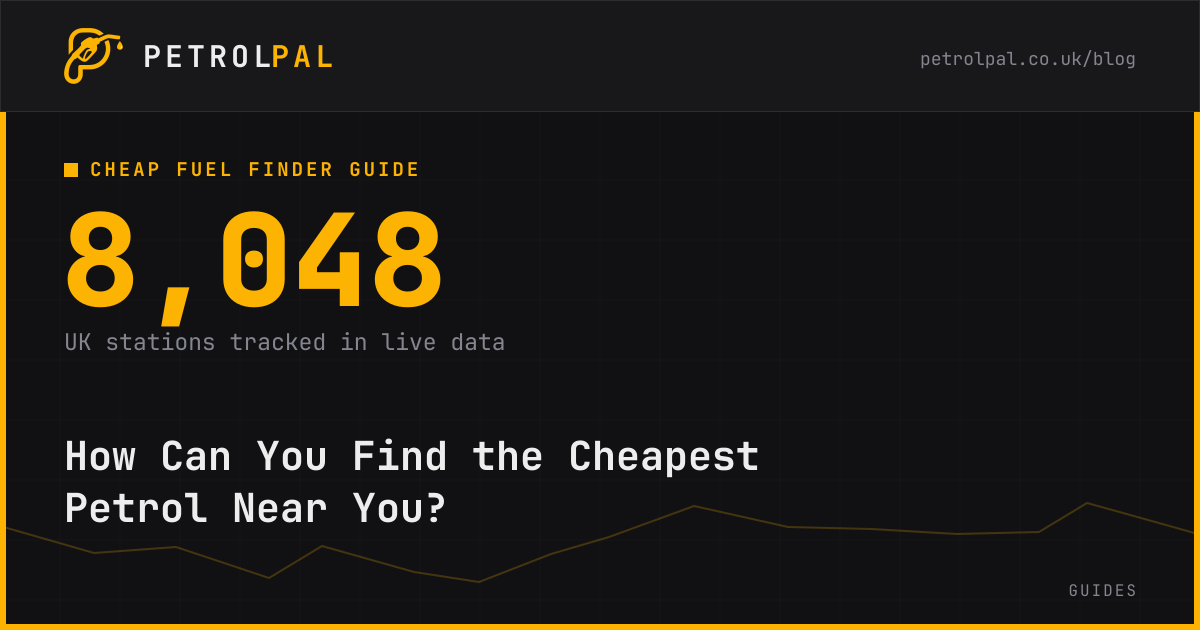
PetrolPal tracked 8,048 UK fuel stations on 18 August 2026. Its priced sample averaged 161.15p per litre for unleaded and 181.89p for diesel. Checking nearby prices before leaving can therefore protect a driver from an avoidable premium. The best choice balances pump price, distance and journey direction, not price alone (PetrolPal, 2026).
The process takes less than one minute. Search your location, choose the correct fuel, sort by price and compare realistic detours. This guide uses current PetrolPal figures and the new legal Fuel Finder rules. It avoids vague annual saving promises. Instead, it shows calculations that any driver can adjust.
What Is the Fastest Way to Find the Cheapest Petrol Near You?
PetrolPal covered 8,048 UK stations in its 18 August 2026 snapshot. The quickest method is to search once, select your fuel and sort nearby results by price. Government Fuel Finder data gives comparison services a common source for current forecourt prices (PetrolPal, 2026).
Use this short routine:
- Open the PetrolPal fuel finder.
- Allow location access, or enter a town or postcode.
- Select unleaded, diesel, premium unleaded or premium diesel.
- Set a useful search radius for your normal journey.
- Sort by price, then check each station's distance.
- Choose a station on your route whenever possible.
Why compare direction as well as distance? A station may sit two miles away but require a slow cross-town return. Another may sit three miles away on tomorrow's commute. The second option can use less time and fuel overall.
Fuel Finder is the UK government's price transparency service. It makes forecourt data available to third-party apps and websites. Public petrol and diesel sellers must register and report prices (DESNZ, 2026).
Since 2 February 2026, sellers must report a price change within 30 minutes. PetrolPal refreshes its own data regularly, but a displayed price still reflects the seller's latest submission. Check the station's freshness details before a long detour (DESNZ, 2026).
Compare Fuel Prices Near You — Search current petrol and diesel prices across the UK.
How Much Do Station Types Affect the Pump Price?
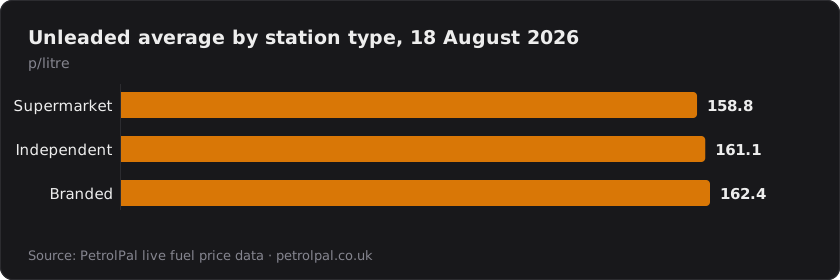
Supermarket unleaded averaged 158.85p per litre on 18 August 2026. Branded forecourts averaged 162.42p, a difference of 3.57p. Diesel showed a wider 4.79p gap, with supermarkets at 178.84p and branded stations at 183.63p (PetrolPal, 2026).
Those are national averages, not promises for every town. Local competition, operating costs and delivery timing can change the order. An independent forecourt can beat the nearest supermarket. A supermarket beside several rivals may price more keenly than an isolated site.
PetrolPal's live sample contained 2,460 supermarket unleaded prices and 4,461 branded prices. The independent group averaged 161.11p across 917 observations. These sample sizes make the broad station-type comparison useful, while local searches remain necessary.
What does the average gap mean at the pump? Multiply the pence-per-litre difference by your fill volume. Then divide by 100 to convert pence into pounds.
- A 3.57p gap across 30 litres equals £1.07.
- A 3.57p gap across 40 litres equals £1.43.
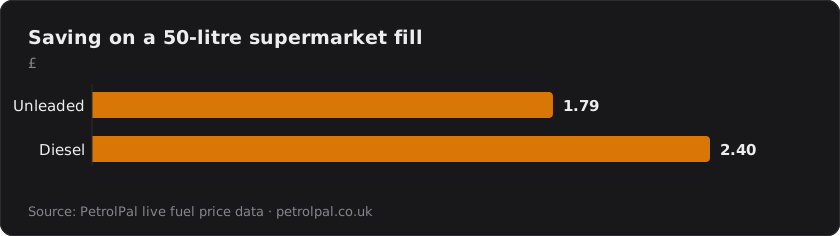
- A 3.57p gap across 50 litres equals £1.79.
- A 4.79p diesel gap across 50 litres equals £2.40.
These are transparent snapshot calculations, not annual saving forecasts. Your result depends on local prices and litres bought. A driver who buys 20 litres should not quote a 50-litre saving.
Are Supermarkets Always the Cheapest Fuel Option?
Costco had the lowest brand average in PetrolPal's 18 August sample. Its 20 unleaded prices averaged 148.10p, while the national unleaded average was 161.15p. However, the small Costco sample and membership requirement mean it cannot serve every driver (PetrolPal, 2026).
The four large supermarket brands sat close together for unleaded. Morrisons averaged 159.38p, Sainsbury's 159.39p and Tesco 159.39p. Asda averaged 159.87p. Those figures show why brand assumptions can fail on a specific day.
Would driving to a different chain save money? Calculate the gross tank saving first. Then subtract the fuel cost of the detour. Include any membership charge when a retailer requires one.
A useful decision rule compares three facts:
- Price gap: How many pence per litre separate the choices?
- Fill volume: How many litres will you buy today?
- Extra travel: How far and how slowly must you drive?
For example, a 4p gap saves £2 on 50 litres. A long urban detour can consume much of that value. A station beside your planned route keeps more of the saving.
The cheapest listed station is not always the cheapest completed fill. The better target is the lowest practical journey cost. PetrolPal's route and distance context helps drivers avoid chasing a headline price that creates extra travel.
How Can You Calculate a Realistic Saving Before Driving?
PetrolPal's supermarket and branded unleaded averages differed by 3.57p per litre on 18 August. That equals £1.79 on 50 litres. This calculation provides a credible baseline because it uses current observed prices and states the assumed fill size (PetrolPal, 2026).
Use this formula:
Gross saving in pounds = price gap in pence × litres bought ÷ 100
Then estimate the detour cost:
Detour cost = extra miles ÷ vehicle MPG × 4.546 × fuel price per litre
Suppose a station is 5p cheaper and you plan to buy 45 litres. The gross saving is £2.25. If the station adds four miles, the detour may remove a meaningful share. Your vehicle's fuel economy decides how much.
Want a faster test? Use these checks:
- Reject a detour that costs more than the gross saving.
- Prefer stations already on today's or tomorrow's route.
- Increase the search radius only when the price gap justifies it.
- Buy fewer litres when the market price looks unusually high.
- Save favourite stations for quicker repeat comparisons.
Do not turn one snapshot into a yearly claim. Prices and driving patterns change. Record several fills if you want a personal annual estimate. Compare what you paid with a nearby practical alternative on each date.
Can Route Planning Cut the Cost of Longer Journeys?
PetrolPal measured a 17.1p-per-litre motorway unleaded premium across 168 motorway forecourts on 1 June 2026. That gap equals £8.55 on a 50-litre fill. The measured diesel premium was 13.8p, worth £6.90 on the same volume (PetrolPal, 2026).
A route plan helps you compare stations before the fuel warning appears. Enter the start, destination and vehicle details. Then review stops near the route instead of searching after entering a motorway service area.
Plan a Lower-Cost Fuel Stop — Compare fuel stops along your planned journey.
How far should you leave the motorway? There is no fixed answer. A short junction detour can work well when the price gap is large. A slow ten-mile diversion may not.
Use the same gross-saving formula before choosing. Also allow time for junction traffic, town roads and the return route. A cheaper stop that causes a missed appointment is not a good result.
Saving vehicle details improves the estimate. Tank size, fuel type and real-world MPG affect where you should stop. A smaller tank needs earlier planning. A diesel driver must compare diesel, not a station's cheaper unleaded headline.
When Should You Check Prices and Set Alerts?
Fuel sellers must report changes within 30 minutes under the rules effective from 2 February 2026. That requirement makes recent comparison data more useful than the old daily reporting model. Drivers should still check close to departure because a seller may change prices after an earlier search (DESNZ, 2026).
Check before a planned fill, not after your tank becomes urgent. Keeping some range gives you more choice. It also reduces pressure to accept the nearest high price.
Price alerts can reduce repeated checking. Set a target for the correct fuel and a useful local area. Choose a target based on current nearby prices, not an old national average.
What if prices rise instead of falling? An alert should support a decision, not delay every purchase. Fill when the remaining range, planned journeys and current local gap make sense together.
A simple weekly habit works well:
- Review nearby prices before your main travel day.
- Check again before any large fill.
- Save stations that fit regular routes.
- Update alert targets when the local range changes.
- Ignore small gaps that require a costly detour.
What Checklist Finds Cheap Fuel Without Wasting Time?
PetrolPal's current sample includes 8,048 stations, while Fuel Finder requires changes within 30 minutes. Those two facts support a simple method: use a broad current dataset, then make a local journey decision. The checklist below takes about one minute (PetrolPal, 2026).
- Search your live location, town or postcode.
- Select the exact fuel your vehicle needs.
- Sort by price and note the first practical options.
- Check the freshness of each price.
- Compare distance, road direction and opening status.
- Calculate the gross saving for your planned litres.
- Reject detours that remove most of the saving.
- Use route planning before long journeys.
- Set an alert when you can wait safely.
- Recheck before leaving if the search is old.
Could you save more through driving style? Usually, lower fuel use and better buying choices work together. Smooth acceleration, correct tyre pressures and fewer unnecessary trips reduce litres consumed. Price comparison then reduces the cost of the litres you still buy.
The key is measurement. Use current local prices and your actual fill volume. Avoid unsupported national saving promises. A small verified saving on repeated practical fills is more useful than a large headline estimate.
PetrolPal tracked 8,048 stations on 18 August 2026, and Fuel Finder sets a 30-minute reporting rule. These facts answer the most common questions about coverage, freshness and savings (PetrolPal, 2026).