A roof box can add about £20.19 to the fuel bill for a 500-mile petrol holiday drive. That worked example uses a car returning 40mpg without the box, PetrolPal's live petrol average of 161.5p per litre, and the Vehicle Certification Agency's typical 22% fuel-use increase at 62mph.
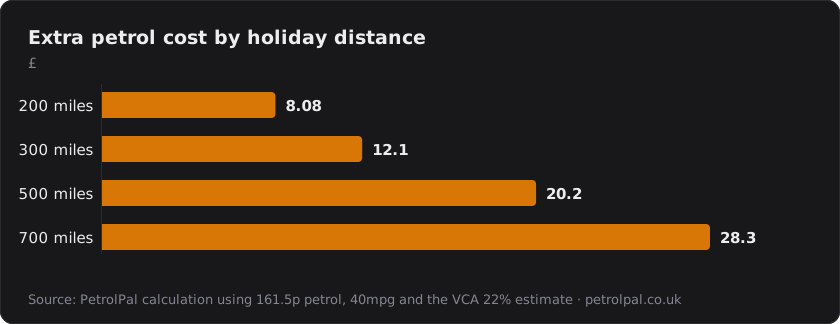
Distance, speed, weather, car shape and box design can all change the result. The same method gives an extra £12.11 for 300 miles and £28.27 for 700 miles. These are planning examples, not quotes for every car.
How Much Extra Fuel Does a Roof Box Use?
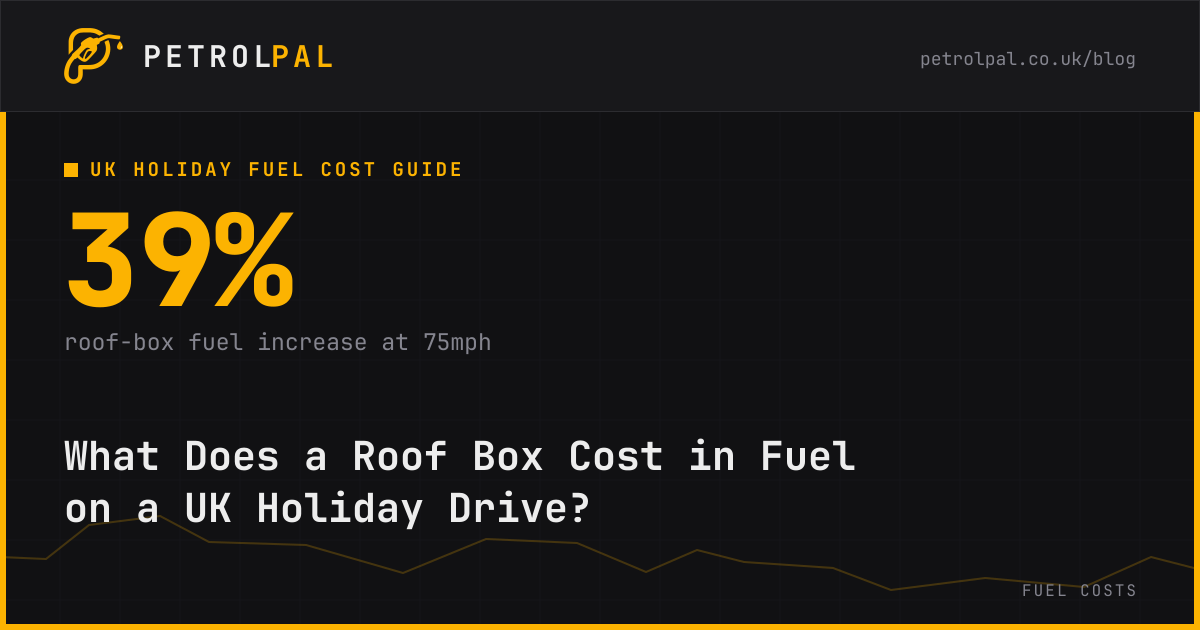
The best current UK government guidance gives a speed-specific answer. A roof box typically adds around 22% to fuel consumption at 62mph and 39% at 75mph, according to the Vehicle Certification Agency. Even empty roof bars can add around 7% at motorway speeds.
Those figures show why one universal roof-box penalty is not useful. Air resistance rises as speed increases. A tall box on a small hatchback can also affect consumption differently from a low box on a large estate car. Crosswinds, rain and traffic add more variation.
The VCA's 75mph figure is not a recommended UK cruising speed. The motorway limit for cars is 70mph. The figure is useful because it shows the steep cost of extra speed. The same VCA page says driving at 75mph rather than 60mph uses around 18% more fuel even before considering a roof box.
A driver should therefore treat 22% as a planning figure for a steady 62mph example, not a promise. Your dashboard's trip computer gives the best car-specific evidence. Reset it before a familiar journey, record the result without the box, then repeat the route under similar conditions with the box fitted.
What Would a Roof Box Cost on a 500-Mile Holiday Drive?
Here is a transparent worked example for a petrol car:
- Round-trip distance: 500 miles
- Normal economy without the box: 40mpg
- Petrol price: 161.5p per litre
- Roof-box fuel increase: 22%
- UK imperial gallon: 4.54609 litres
The car would use about 56.83 litres without the box. At 161.5p per litre, that fuel costs about £91.77. Applying the VCA's 22% planning increase adds about 12.50 litres and £20.19.
PetrolPal's public Fuel Finder feed showed 161.5p per litre for petrol and 183.9p for diesel at 04:04 UTC on 29 August 2026. It covered 8,096 stations at that snapshot time (PetrolPal, 2026). Prices move, so use the live fuel-price map before leaving.
Official weekly figures support the price context. The UK average for the week beginning 24 August was 161.63p for petrol and 182.82p for diesel, according to DESNZ. PetrolPal's live number is used in the worked calculation because it reflects a more recent Fuel Finder snapshot.
At the same price and economy, the estimated extra petrol cost changes with distance:
| Round-trip distance | Fuel cost without box | Extra cost at 22% |
|---|---|---|
| 200 miles | £36.71 | £8.08 |
| 300 miles | £55.06 | £12.11 |
| 500 miles | £91.77 | £20.19 |
| 700 miles | £128.48 | £28.27 |
The table isolates the roof-box assumption. It does not add a separate luggage penalty, poor tyre pressure, congestion or detours. Adding every possible percentage would create false precision and could count the same loss twice.
Does a Diesel Car Change the Answer?
Diesel can reduce the number of litres used when the car returns better mpg, but each litre currently costs more. A 500-mile diesel example at 50mpg uses about 45.46 litres before the box. At PetrolPal's 183.9p live average, the baseline cost is £83.60.
A 22% roof-box increase adds about 10.00 litres and £18.39. For 300 miles, the same assumptions give an extra £11.04. That is slightly below the 40mpg petrol example because the assumed diesel car uses fewer litres over the distance.
Do not choose 40mpg or 50mpg because they look typical. Use your own motorway result from recent trips. Official laboratory mpg can differ from a loaded holiday journey. The easiest estimate starts with the economy your car actually achieves on a similar road.
The formula is:
Trip litres = miles ÷ mpg × 4.54609
Extra roof-box cost = trip litres × price per litre × expected percentage increase
For the VCA's 62mph planning case, use 0.22 as the percentage increase. If most of the route is slower A-roads or urban traffic, the aerodynamic penalty may be lower. A box still adds weight, but drag becomes more important as speed rises.
Why Do Speed and Empty Roof Bars Matter So Much?
A roof box changes the shape presented to the air. The engine must provide more energy to push that larger, less smooth shape through the air. Faster travel makes this effect much stronger, which explains the gap between the VCA's 62mph and 75mph examples.
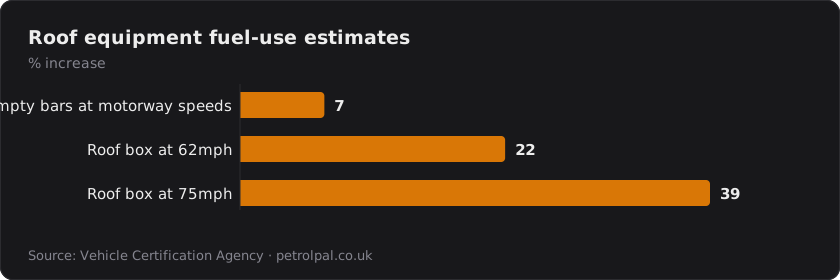
For the same 500-mile petrol example, a 7% empty-bar penalty would cost about £6.42. The VCA's 39% roof-box estimate at 75mph would equal about £35.79, although 75mph exceeds the UK limit. The comparison shows that removing unused equipment and reducing speed can matter more than trimming a few kilograms of luggage.
Smooth driving also helps. The VCA advises drivers to anticipate traffic, avoid unnecessary acceleration and braking, and use an appropriate speed. A roof box does not stop those methods from working. It makes avoiding waste more valuable because the car already faces extra drag.
A lower cruising speed can also make a planned fuel stop easier to reach. Use the PetrolPal route planner to compare stops along the journey, rather than making a long diversion for a small per-litre saving.
How Should You Pack a Roof Box and Loaded Car?
Put bulky, light items in the roof box. Keep heavy items low and inside the car where possible. The AA advises drivers to check the vehicle handbook, include the rack's own weight, and keep heavier items inside.
The roof-load limit includes more than the luggage. The RAC says weight limits include the bars, attachments and the materials used in bars and boxes. Check the car's dynamic roof-load limit and the limits for the bars and box. Use the lowest applicable limit.
A loaded vehicle changes handling, braking and stability. Secure every item so it cannot move. Check the box fittings and straps during stops. Remember the new total height before entering a car park, ferry deck or height-restricted area.
Passenger and luggage weight also count towards the vehicle's maximum authorised mass. Find that limit on the VIN plate or in the handbook. Do not assume that spare cabin space means spare weight capacity.
The financial lesson is secondary to safety. A heavy roof load can increase fuel use, but there is no reliable universal percentage for each extra passenger or suitcase. Avoid invented numbers. Use the manufacturer's limits and your car's actual trip economy.
What Tyre Pressure Should You Use for a Holiday Load?
Use the vehicle manufacturer's pressure for the actual load. Do not add an arbitrary amount. Many cars show both a normal setting and a loaded setting on the driver's door sticker, fuel-filler flap or in the handbook.
Michelin describes the loaded pressure as the setting to use when the vehicle is particularly loaded, such as for a holiday. Front and rear recommendations may differ. Check the tyres cold unless the vehicle handbook says otherwise.
The VCA explains that under-inflated tyres create more resistance, making the engine work harder. It recommends checking and adjusting pressures before long journeys. Correct pressure supports fuel economy, tyre life, braking and handling.
Do not combine an estimated tyre penalty with the 22% roof-box figure unless you have measured both effects separately. The roof-box number is already a broad planning estimate. The useful action is simple: set the correct loaded pressures before departure and return to the normal setting after unloading if the manufacturer specifies one.
How Can You Cut the Roof-Box Fuel Bill?
Start by asking whether every item needs to travel. Removing unnecessary weight helps, but removing unnecessary external equipment helps more at speed. Fit the box as late as practical and remove it after the holiday. Do not leave empty bars installed for months when the VCA says they can add around 7% at motorway speeds.
Keep within the speed limit and use a steady, appropriate speed. Leave enough distance to avoid repeated braking and acceleration. Plan food, comfort and fuel stops together so one stop replaces several diversions.
Compare fuel near the route before departure. PetrolPal's 29 August live statistics covered 8,076 UK stations, with 7,858 unleaded prices averaging 161.60p per litre (PetrolPal, 2026). Local prices can differ from the national average, so a suitable on-route station can offset part of the box cost.
Finally, calculate the penalty with your own distance and mpg. A realistic estimate helps you budget without pretending the result is exact. If the box creates essential cabin space and keeps luggage secure, an extra £12 or £20 may be reasonable. Knowing the likely cost lets you make that choice before the journey.