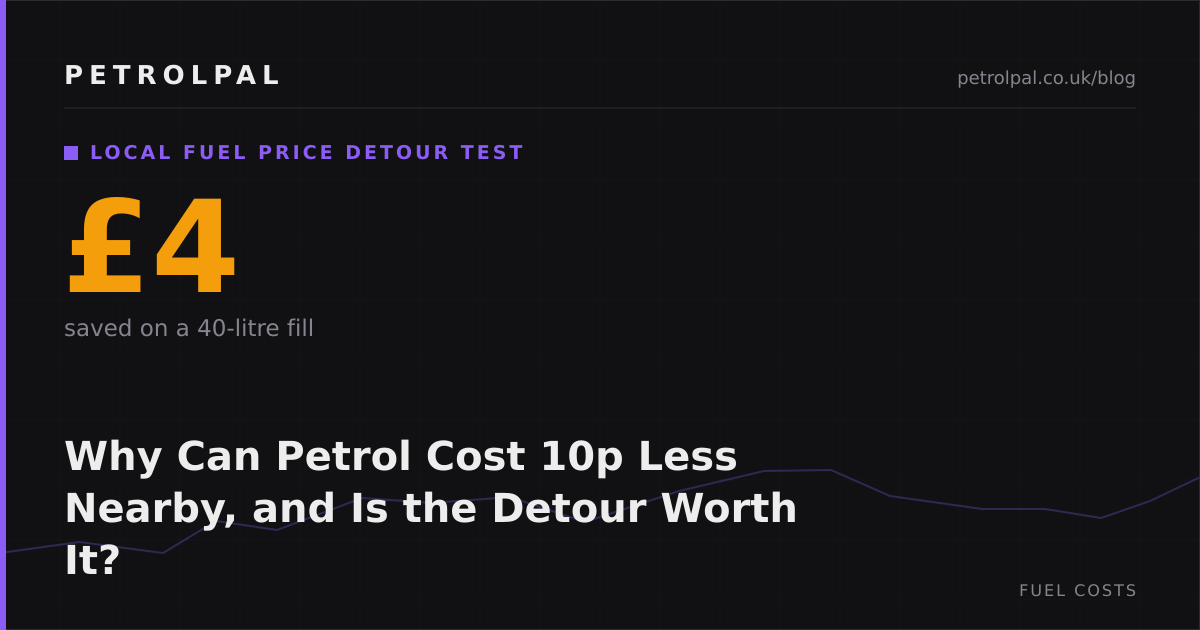
A station charging 10p less per litre saves £4 on a 40-litre fill. At PetrolPal's live UK petrol average of 170.6p per litre, a 45mpg car uses about 17.2p of fuel per extra mile. The fuel-only break-even point is therefore about 23.2 total extra miles. Your sensible limit is lower once time, traffic and vehicle wear matter.
The cheaper forecourt can be only a short distance away because fuel pricing is local. Competition, outlet type, operating costs and retailer strategy differ from one area to another. Compare the right grade, count every added mile and calculate against the litres you will actually buy.
Why Can Petrol Prices Differ So Much Between Nearby Stations?
Fuel prices are national headlines but local decisions. The Competition and Markets Authority found significant price differences between local areas. Lower prices were typically associated with supermarket competition, especially where an Asda site was present. It also found that prices were likely to be higher where supermarkets were absent and operating costs were greater, including some remote areas.
That does not mean every supermarket is cheapest or every independent is expensive. It means the strength and type of nearby competition can change what a retailer believes motorists will accept. Two forecourts can face different rivals even when they sit within the same town.
Retail strategy matters too. The CMA's August 2026 monitoring report said most retailers continued to use passive pricing strategies. It was concerned that these strategies were causing sustained high margins. The report also found that non-supermarket retailers remained consistently more expensive than supermarkets as a group.
Wholesale costs do not reach every pump at the same moment. Retailers buy stock at different times, hold different inventories and choose different selling prices. The CMA said recent retail-price falls lagged wholesale-price falls because fuel is purchased before it is sold. That timing can widen a local gap temporarily, even before competition and site costs enter the calculation.
Location affects costs and customer choice. A busy urban supermarket may sell large volumes and use fuel to attract shoppers. A small rural site may have fewer nearby rivals and higher delivery or operating costs. A convenient site beside a major route can charge for that convenience. These factors explain why the closest station is not always the cheapest.
What Do Current PetrolPal Prices Show About Station Types?
PetrolPal's UK-wide data showed 8,111 stations and was last synced at 14:43 UTC on 15 September 2026. The public summary averaged regular petrol at 170.6p per litre and diesel at 193.7p per litre across 8,131 stations in its related snapshot (PetrolPal, 2026). Small count differences can occur because endpoints use different filters and cache times.
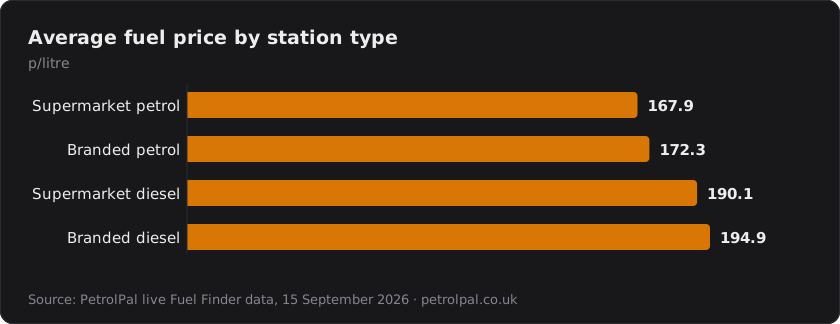
The detailed PetrolPal statistics placed supermarket petrol at 167.89p per litre and branded-site petrol at 172.32p. That is a 4.43p average gap. On a 40-litre fill, the difference is about £1.77.
For diesel, supermarkets averaged 190.10p per litre and branded sites averaged 194.91p. The 4.81p gap is worth about £1.92 on 40 litres. These are national station-type averages, not promises about a specific local pair. Your nearby gap can be smaller, larger or reversed.
Official national figures give a separate check. The Department for Energy Security and Net Zero reported UK averages of 168.14p for petrol and 190.72p for diesel for the week beginning 14 September 2026. PetrolPal's live feed uses station-level Fuel Finder data, while the official weekly series measures a UK average. Use live local prices for the decision and the weekly series for market context.
A 10p local difference is larger than the current average gap between supermarket and branded sites. It is still plausible. It may reflect a highly competitive cluster, a remote or convenient location, different update timing or a temporary pricing decision. Check that both prices refer to the same fuel grade before treating the difference as a saving.
How Do You Calculate Whether a Fuel Detour Pays?
Start with the gross saving:
price gap in pounds × litres bought = gross saving
For a 10p gap, use £0.10. Buying 10 litres saves £1, 20 litres saves £2, 40 litres saves £4 and 50 litres saves £5. Use the planned purchase, not the tank's stated capacity.
Then calculate what the extra journey costs in fuel:
fuel price per litre × 4.54609 ÷ real mpg = fuel cost per mile
The 4.54609 converts one UK gallon into litres. Use your real-world mpg from recent driving, not an optimistic brochure number. Town traffic, cold starts and short journeys can make your actual result worse.
Finally, calculate the fuel-only break-even distance:
gross saving ÷ fuel cost per mile = maximum total extra miles
Using 170.6p per litre, a 45mpg petrol car costs about 17.2p per mile in fuel. A £4 saving therefore covers 23.2 total extra miles. A £2 saving on a 20-litre top-up covers only 11.6 miles.
The phrase "total extra miles" is important. If a station adds three miles on the way there and three miles back to your normal route, the detour is six miles. Do not compare a three-mile one-way distance with a six-mile fuel cost. Use a route planner rather than a straight-line map measurement.
How Far Is Worth Driving for 10p per Litre Off?
There is no single distance because litres and fuel economy change the answer. At 170.6p per litre, these fuel-only limits apply to a 10p saving:
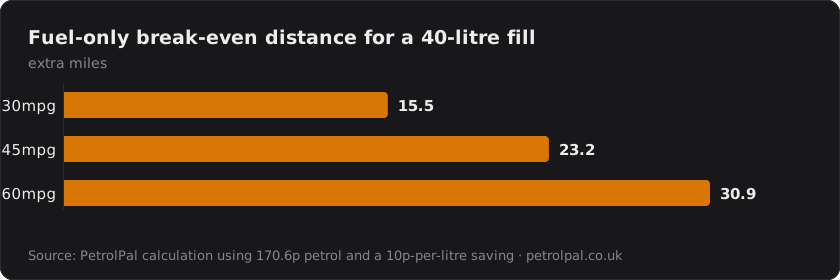
| Litres bought | Gross saving | 30mpg car | 45mpg car | 60mpg car |
|---|---|---|---|---|
| 10 litres | £1.00 | 3.9 miles | 5.8 miles | 7.7 miles |
| 20 litres | £2.00 | 7.7 miles | 11.6 miles | 15.5 miles |
| 40 litres | £4.00 | 15.5 miles | 23.2 miles | 30.9 miles |
| 50 litres | £5.00 | 19.3 miles | 29.0 miles | 38.7 miles |
These numbers are mathematical ceilings, not recommendations. They count fuel only. A special 20-mile journey for a £4 gross saving may leave a small fuel benefit, but it is unlikely to repay your time and vehicle use.
A practical rule is to choose the cheaper station when it sits on your route or requires only a small diversion. The calculation becomes less attractive as the extra journey approaches the table's limit. Leave a margin for queues, congestion, wrong turns and a possible price change before arrival.
If two stations are already on your route, the lower price usually wins because the added mileage is close to zero. If the cheaper option requires a separate trip, the best answer may be the slightly dearer station you will pass anyway.
What Costs Does the Fuel-Only Formula Miss?
Fuel is only one marginal cost. Extra miles also use tyres, brakes, servicing life and depreciation. A detour can consume time, add stress and create parking or toll costs. Stop-start traffic can burn more fuel than the mpg assumption predicts.
You can use a stricter formula if you have an all-in marginal cost per mile:
gross saving ÷ chosen cost per mile = practical break-even distance
Do not insert a universal cost without explaining it. Vehicle costs vary sharply by age, finance, mileage and maintenance. Your own recent costs give a better estimate than a generic figure.
Time deserves a separate test. Ask whether you would make the trip if someone offered you the expected net saving as payment. A £1.50 benefit may be welcome for a station on your route. It may not justify a 20-minute special journey.
The formula also assumes the displayed cheaper price remains available. Fuel Finder requires changed prices to be published within 30 minutes, according to DESNZ guidance. A retailer can still change its price while you travel. Confirm the pole sign and pump before fuelling.
How Can You Make the Comparison More Reliable?
First, compare like with like. Standard unleaded and premium unleaded are different products. Diesel and premium diesel are also different. A premium price beside a regular price creates a false saving.
Second, check the update time and route. PetrolPal shows current Fuel Finder information and helps you compare stations near you. Use the fuel price map for local choices or the route planner for a longer journey. The useful distance is the mileage added to the journey you planned to make.
Third, decide how many litres you will buy. A 10p gap looks large, but a 10-litre top-up saves only £1. Waiting until you need 40 litres turns the same price gap into £4 without increasing the detour.
Fourth, allow for access conditions. A low price may require membership, sit behind a congested junction or operate shorter hours. Check the station details before leaving your route.
Finally, confirm the price at the forecourt. Comparison data helps you shortlist the best option, but the pump shows what you will pay. If the listed figure differs, do not continue merely because the journey is complete. Recalculate against the actual price.
When Is the Cheapest Station Not the Best Choice?
The cheapest station is not the best choice when the detour consumes most of the gross saving. It may also be a poor option when it creates a long queue, forces a cold short trip or encourages you to buy fuel you did not need.
Consider a 10p gap on a 20-litre purchase. The headline saving is £2. A 45mpg petrol car at the current PetrolPal average uses that saving after 11.6 extra miles. Even a six-mile detour consumes about £1.03 in fuel, leaving only 97p before time and wear.
Now consider 40 litres at the same gap and the same six-mile detour. The gross saving is £4 and the fuel cost is about £1.03, leaving roughly £2.97 before other costs. The second trip is more sensible because the purchase is larger, not because the station changed.
Convenience can therefore have a real value. The goal is not to buy at the lowest displayed pence figure at any cost. The goal is to reduce the total cost of getting the fuel you planned to buy.