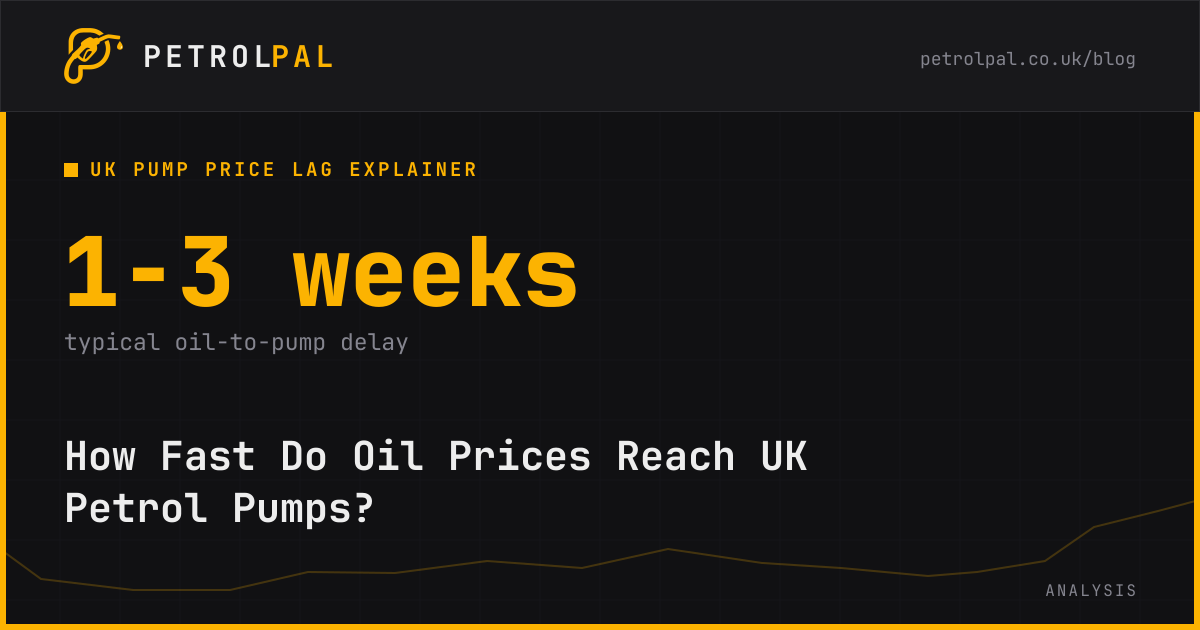
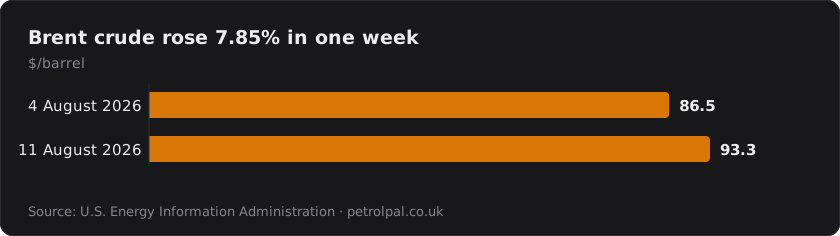
Oil and wholesale fuel changes usually reach UK petrol pumps within one to three weeks. The RAC describes a typical two-week delay, while CMA evidence supports a wider range. The clock varies because refiners, suppliers and retailers buy at different times. Old stock, sterling and local rivals can also change the final date. Brent rose from $86.47 a barrel on 4 August 2026 to $93.26 on 11 August, a $6.79 or 7.85% increase (EIA, 2026). Yet crude is only the first cost, so drivers should watch wholesale fuel and local prices before expecting an instant pump move.
Info
Info
Key Takeaways: oil starts the change, but refined fuel and sterling bring it closer to UK pumps. Existing stock then affects timing. Local competition decides how quickly each forecourt responds, so drivers should compare nearby prices instead of waiting for one national date.
How Long Does an Oil Price Change Take to Reach Pumps?
The RAC gives a typical two-week lag, while CMA evidence supports one to three weeks (RAC, 2026). This range is the best practical answer. A busy forecourt can move sooner, while a quieter station may sell older stock for longer.
The supply chain explains the range because a UK forecourt does not buy Brent crude directly. Refineries turn crude into petrol and diesel, which trade in separate wholesale markets. Retailers then buy fuel, receive deliveries and store it underground. A retailer may hold fuel bought before the latest oil move. Busy stations clear that stock faster, while different supply deals let neighbours respond on different days.
The CMA road fuel review says wholesale changes generally appear at pumps after several weeks. It also records buying delays of one to three weeks. That evidence supports a range, not a fixed promise. An overnight move can happen, but competition or expected costs may cause it.
Why Does Crude Oil Not Move Pump Prices One for One?
In the CMA's 2021 to 2022 review, crude added about 20p to the pump-price rise. Refining added about 24p and sterling added around 7p (CMA, 2022). Crude therefore cannot predict the full pence-per-litre change on its own.
Oil and refined fuel trade mainly in US dollars, so UK buyers also face the pound's exchange rate. A stronger pound can soften a dollar rise, while a weaker pound can raise costs. Petrol and diesel then have separate refining costs. Refinery outages, demand and tight capacity can widen the gap between crude and each finished fuel. Our August fuel report tracks this split.
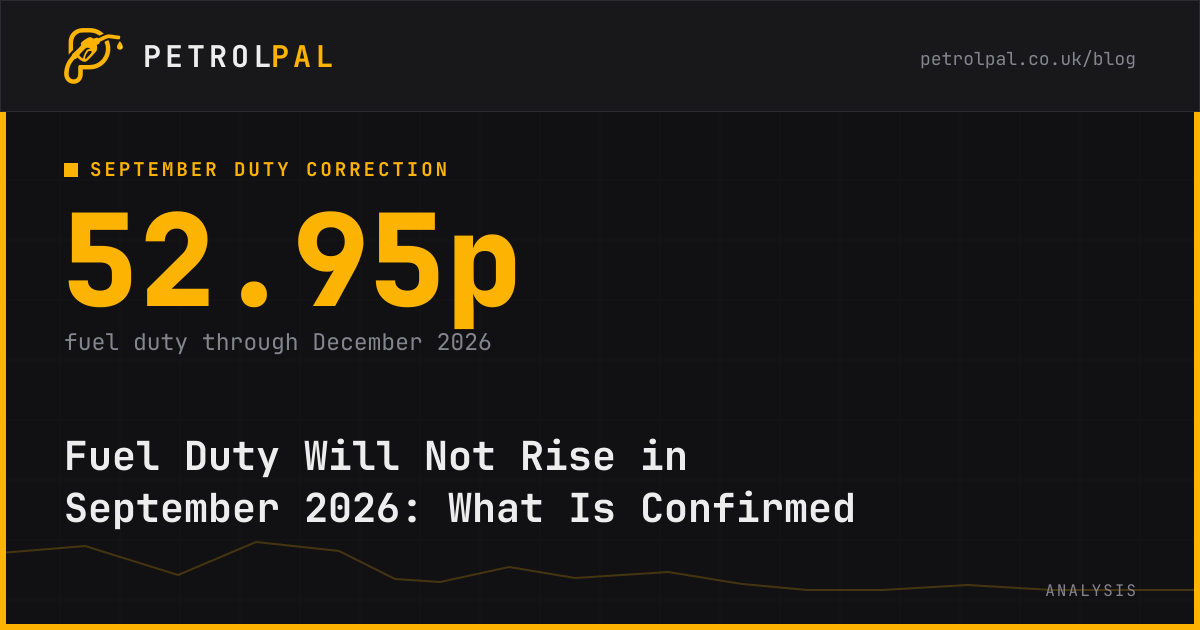
Duty and VAT then shape the till price. Fuel duty is 52.95p per litre for standard petrol and diesel. VAT is 20% (HM Government). Duty stays fixed per litre, while VAT changes with the taxable pump price. Our fuel duty update explains the current decision.
Crude gives drivers an early warning, not a pump forecast. Refined wholesale petrol priced in pounds offers a nearer signal. Live forecourt data then shows whether retailers have passed the cost through. Following those three stages is more useful than turning one oil headline into an exact pump estimate.
What Happened After Brent Rose 7.85% in August 2026?
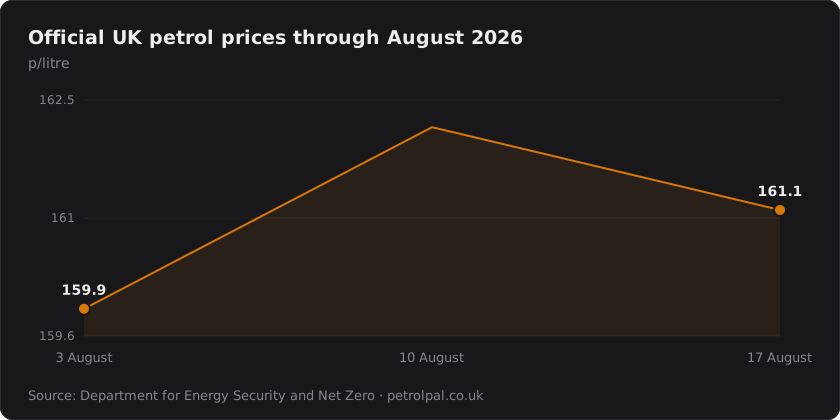
Brent climbed from $86.47 on 4 August to $93.26 on 11 August, a 7.85% rise (EIA, 2026). UK petrol rose 2.26p between the weeks beginning 3 and 10 August. It then fell 1.03p during the following week.
The official DESNZ weekly series put unleaded at 159.89p on 3 August and 162.15p on 10 August. It fell to 161.12p on 17 August, while diesel eased from 181.97p to 181.38p. Does this prove a seven-day delay? No, because earlier costs were still moving through the chain. A pump can fall after oil rises if an older wholesale fall arrives first.
The CMA August 2026 report reviews crude, refining, pump prices, margins and stock together. This wider view avoids blaming each weekly move on the latest oil headline. The evidence shows direction and timing, but it cannot give every forecourt one shared response date.
Why Do Some Forecourts Change Prices Faster Than Others?
CMA monitoring put 2025 average margins at 9.6p per litre for supermarkets and 11.1p for other retailers (CMA, 2025). Different sales volumes, costs and pricing choices help explain why forecourts do not move together.
A busy supermarket can sell through a delivery quickly, while a low-volume rural site may hold older fuel longer. Delivery distance, storage and supply timing all affect the next price. Competition also changes the response. A station with close rivals may cut sooner, while a remote site may face less pressure. Retailers can also price against the expected cost of their next load.
The AA found uneven pass-through in May 2026. Wholesale costs rose 3p to 6p for more than two weeks, while average petrol rose under 2p (AA, 2026). Later wholesale falls reached pumps faster. Stock and contracts can cause a fair delay, but a long wait beside high margins can raise questions. The CMA tracks retail spreads for that reason. Our motorway price study shows how location also affects prices.
What Do PetrolPal's Live Prices Show About Local Timing?
PetrolPal tracked 8,062 UK stations at 05:01 UTC on 23 August 2026. Unleaded averaged 161.28p and diesel averaged 182.52p (PetrolPal, 2026). Local prices still differed by station type, so a national oil trend cannot identify the best nearby buying time.
The live sample held 7,851 unleaded prices. Supermarket unleaded averaged 158.66p, while branded forecourts averaged 162.71p. The 4.05p gap was worth £2.23 on a 55-litre fill. Individual sites can sit above or below either group, but the average gap gives drivers a useful benchmark.
Median unleaded was 160.9p, which gives a clearer centre because unusual records have less effect. Recent station changes still moved both ways. Some sites cut unleaded by 2p or 3p, while others added 1p. One average cannot show those separate clocks, so drivers need a local search with distance and update times. Our cheapest petrol guide explains the check.
Should You Fill Up Now or Wait for Oil Prices to Fall?
PetrolPal's 4.05p gap between branded and supermarket unleaded averages was worth £2.23 on 55 litres on 23 August (PetrolPal, 2026). A local comparison can save money now, while waiting for a national fall has no fixed result or date.
If your tank is low, buy enough fuel to stay safe instead of waiting for a forecast. If the tank is not urgent, a partial fill can preserve choice. The benefit depends on the expected fall, litres bought and nearby spread. Use this formula: pence-per-litre difference × litres ÷ 100. A 5p gap saves £2.75 on 55 litres, but a special journey can remove that saving through extra fuel, time and wear.
Waiting works best when your tank, route and evidence all support it. You want wholesale petrol falling, local prices still high and enough fuel to wait safely. Otherwise, the cheapest suitable station on your route is often the safer choice. Why gamble on a date that the supply chain cannot promise?
Which Price Signals Should Drivers Watch Next?
Official petrol fell 1.03p in the week beginning 17 August after rising 2.26p one week earlier (DESNZ, 2026). Drivers should watch several signals because crude, wholesale fuel and forecourt prices can move differently for short periods.
Start with Brent as an early market signal, then check sterling because UK fuel has dollar pricing. Wholesale petrol and diesel give a closer view of finished-fuel costs. DESNZ averages show national pump movement, while PetrolPal reveals local choices. CMA margin reports add context when cuts appear slow. No signal predicts one station's exact price, so follow crude, sterling, wholesale fuel, national averages and local forecourts.
The RAC gives a typical two-week supply-chain lag, while CMA evidence supports one to three weeks (RAC, 2026). These answers cover timing, tax, sterling and local price differences with figures drivers can use.