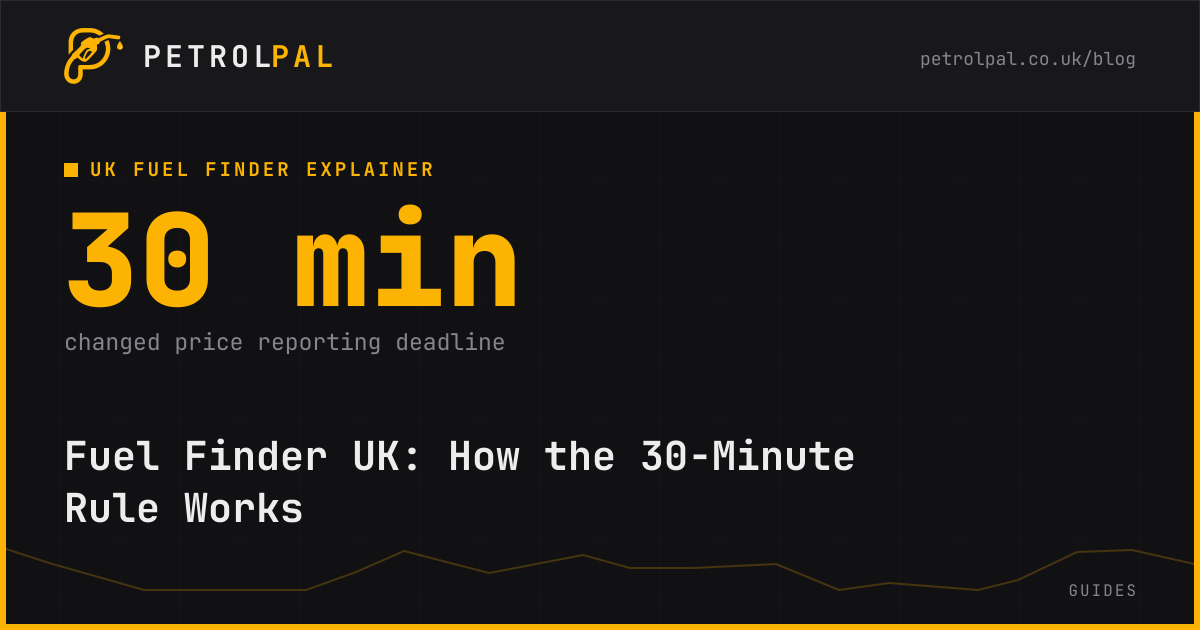
Fuel Finder covers about 8,000 UK forecourts. Retailers must report a changed petrol or diesel price within 30 minutes. The aggregator then has five minutes to update its price API. These two limits help drivers compare recent prices, but they don't make every number a guaranteed pump quote.
The service is an official open-data system, not a shopping app. Retailers submit their information to the Fuel Finder aggregator. PetrolPal turns that feed into a live fuel map, fuel statistics, and a route planner. This guide explains the law and the checks worth making before a detour.
What Is Fuel Finder UK?
Fuel Finder started on 2 February 2026, according to the GOV.UK Fuel Finder collection. It is a UK-wide data service for retail petrol and diesel prices. Drivers see the results through third-party tools, including PetrolPal, rather than one government comparison app.
The scheme covers England, Wales, Scotland, and Northern Ireland. Regulation 2 defines the motor fuel in scope as petrol or diesel. Public EV charging, LPG, and hydrogen don't fall under this 30-minute price rule.
Why use an open feed? One trusted source can power many useful products. A map can show nearby prices. A route tool can find fuel stops along a trip. A data page can reveal wider patterns. Drivers gain choice without learning how to read a raw API.
The government's Fuel Finder page links the rules, technical material, and enforcement guidance. PetrolPal uses the official feed behind its fuel price pages. Each consumer service still decides how often it fetches, stores, and displays that data.
Fuel Finder is therefore the source, not the final screen. The same official record may appear in several apps. Layout, filters, and refresh times can differ. That is why a timestamp matters almost as much as the price itself.
How Does the 30-Minute Fuel Price Rule Work?
A retailer has 30 minutes after a selling price changes to report the new figure. That duty appears in Regulation 9. The clock starts when a relevant pump price changes. It doesn't require every unchanged price to be sent again twice an hour.
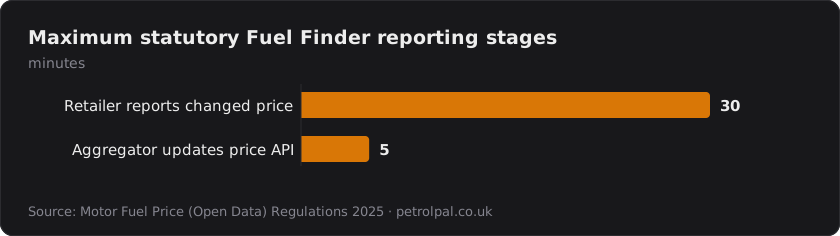
The aggregator has a separate deadline. It must update its always-available price API within five minutes of receiving reportable data. Regulation 13 sets that limit. A downloadable file also exists, but it follows a slower, twice-daily schedule.
Add the two legal windows and the chain can take 35 minutes. A comparison app may add a short delay through its own sync or cache. PetrolPal exposes the latest source time through its live Fuel Finder feed, so readers can see when the data last moved.
Does an old timestamp prove a price is wrong? No. A forecourt may keep the same amount for days. Its record can look old and still match the pump. The rule concerns changed prices, not the age of every unchanged row.
Late or incorrect reports can happen too. The law creates a clear duty and gives the CMA an enforcement route. It can't promise that every app screen will match every sign at every second. That practical limit is important before driving miles for a small saving.
A changed price must reach the aggregator within 30 minutes. The live API must then change within five minutes. Together, Regulations 9 and 13 allow up to 35 minutes before any extra app delay.
Can Drivers Trust Fuel Finder Prices at the Pump?
PetrolPal's live endpoints cover roughly 8,000 forecourts, as shown by its fuel data page and live feed. That scale makes the service useful for comparison. Still, a displayed amount is evidence, not a binding quote for a later purchase.
Use three checks. First, compare the shown amount. Second, note when the source last changed. Third, allow for your travel time. A correct price can move before you arrive. A station can also close, run short of one grade, or have a queue. Roadworks, weather, opening hours, membership terms, and payment rules may alter the cheapest practical choice.
PetrolPal's statistics endpoint contained 7,816 unleaded records and 7,900 diesel records when this article was prepared. The sample is broad, yet it isn't identical to the forecourt count. Not every site reports every grade at the same time.
That gap shows why counts need labels. A station total describes locations. A price count describes usable records for one fuel. Mixing them would make the coverage look better or worse than it is. PetrolPal publishes both surfaces so readers can inspect the source.
Freshness also has a cash limit. Saving 3p per litre on 45 litres gives £1.35. A long drive can erase that gain through fuel, time, or traffic. The route planner helps compare stops near a journey rather than sorting signs without travel context.
Can you trust Fuel Finder? Yes, as a strong way to shortlist nearby options. Then verify the forecourt sign and pump before buying. That final glance protects you from a recent change, display lag, or simple data error.
What Can the CMA Do About Late or Wrong Prices?
The maximum fixed penalty can reach 1% of a retailer's worldwide turnover. A daily penalty can reach 5% of worldwide daily turnover. Regulation 19 sets those ceilings. They aren't automatic fines for each late report.
The CMA can issue compliance notices, publish action, seek a court order, and impose a financial penalty. False or misleading information can also lead to action. These powers matter because an open feed only helps when businesses submit honest data on time.
The CMA's Fuel Finder enforcement guidance explains its approach. Formal action is more likely when harm is serious, repeated, or ongoing. The regulator may first use informal contact to secure a quick fix.
Could a driver demand a 1% fine after one mismatch? No. Enforcement belongs to the CMA, and the percentage is only a maximum. A reasonable excuse and the facts of the case both matter.
Drivers can still preserve useful proof. Take a screenshot that shows the service, amount, and time. Photograph the forecourt sign if safe. Keep the receipt when the paid price differs. Clear evidence helps separate a true reporting issue from an old screen or mistaken grade. Record the postcode, retailer name, pump number, odometer reading, and exact clock time. Those details create a sharper audit trail. Geotagged images, card statements, witness names, and journey logs may support a disputed report.
The penalty system is meant to improve compliance, not award shoppers a refund. A mismatch may still involve consumer rights, but Fuel Finder enforcement is a public function. The CMA guidance is the right source for the regulator's process.
How Should You Use Fuel Finder to Pay Less?
PetrolPal's live statistics showed supermarket unleaded below the branded average when this guide was prepared. Even a 3p-per-litre gap saves £1.65 on 55 litres. The real gain depends on fill size and the distance needed to reach that station.
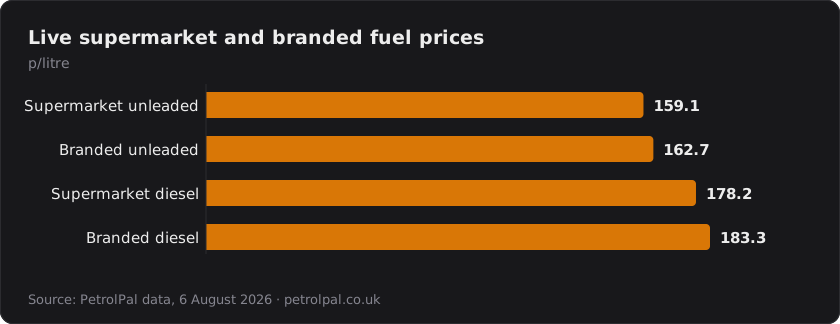
Start with the PetrolPal map. Choose the right fuel, then compare options you can reach without a wasteful detour. Check the data time. Estimate how many litres you need. A larger fill makes each penny of difference worth more.
Next, set a travel limit. If two stations differ by 2p and you need 40 litres, the gross saving is just 80p. A site already on your route may cost less overall, even when its pump price is slightly higher. Cheapest nearby often beats cheapest anywhere.
Fuel Finder changes the useful question. Drivers no longer need to ask which brand is usually cheap. They can ask which reachable forecourt is cheap now. Group averages help, but an independent or branded site can still beat the local supermarket on a given day.
Check the sign when you arrive. Confirm that you selected the right grade and note any loyalty condition. Some displayed discounts depend on a membership card or minimum shop spend. A clean pence-per-litre comparison should use the price that you can actually pay.
For routine travel, use fuel price trends to judge whether today's offer looks low or merely normal. For longer drives, plan a stop through the route tool. Both choices keep the saving tied to a real journey.
What Is the Bottom Line for Drivers?
Fuel Finder gives retailers 30 minutes to report a changed petrol or diesel price. The aggregator then gets five minutes to update its API. Regulations 9 and 13 make comparison faster and more consistent, but they don't turn each screen into a guaranteed quote.
The benefit is broad choice. PetrolPal's live data covers about 8,000 forecourts. Drivers can compare a real local market instead of relying on one roadside sign, memory, or a fixed view of which brand is cheapest.
Use the live fuel map before a large fill. Weigh the saving against the detour. Check the update time, then confirm the pump price when you arrive. Fuel Finder supplies the evidence, while a sensible route turns that evidence into money saved.